What Is a Mortgage and How Does It Work

Buying a home usually costs far more than most people can pay in cash. A mortgage makes that purchase possible by letting a lender pay most of the price upfront, while the buyer repays the money over many years.
A mortgage is a long-term loan secured against a property. That security matters. If the borrower keeps up with the agreed payments, they gradually build ownership in the home. If they stop paying and cannot resolve the problem, the lender can take legal steps to repossess the property.
This guide explains the basics in plain English, with UK-style examples. It is for general information only and is not financial advice.
What a mortgage actually is
A mortgage has two parts: the loan and the legal charge over the property.
The loan is the money borrowed from a bank, building society, or other lender. The legal charge gives the lender rights over the property if the borrower does not repay as agreed.
For example, if a home costs £250,000 and the buyer has a £25,000 deposit, they may need to borrow £225,000. That £225,000 is the mortgage balance at the start.
The buyer does not usually receive that money directly. On completion, the lender sends the funds through the legal process so the seller gets paid and the buyer becomes the owner.
The key point is simple: the property acts as security for the loan.
How a mortgage works month by month
Most mortgages run for a long period, often 25 to 35 years. The borrower makes monthly payments during that term.
Each payment usually covers:
Interest
The cost of borrowing the money.
Capital
The amount borrowed, paid back bit by bit.
With a repayment mortgage, the balance should fall over time if payments are made as agreed. At the end of the term, the loan should be fully paid off.
With an interest-only mortgage, monthly payments cover only the interest. The original amount borrowed still needs to be repaid at the end of the term, usually through savings, investments, sale of the property, or another agreed plan.
Mortgage type | What the monthly payment covers | What happens at the end |
Repayment mortgage | Interest and part of the loan | The mortgage should be cleared |
Interest-only mortgage | Interest only | The full loan still needs repaying |
Repayment mortgages are common for residential buyers because they provide a clear path to owning the home outright.
The main parts of a mortgage
A mortgage can feel full of unfamiliar terms. These are the ones that matter most.
Deposit
The deposit is the buyer’s contribution to the purchase price. A larger deposit usually means borrowing less, which can reduce risk for the lender.
The size of the deposit also affects the loan-to-value ratio.
Loan-to-value ratio
Loan-to-value, often shortened to LTV, compares the mortgage amount with the property value.
If someone buys a £200,000 property with a £20,000 deposit, they borrow £180,000. That is a 90% LTV mortgage.
A lower LTV can sometimes give access to better rates, because the lender is taking on less risk.
Interest rate
The interest rate decides how much the lender charges for the loan. Even a small rate change can affect monthly payments, because mortgages are large and last a long time.
Rates may be fixed, variable, tracker, or discounted. Each works differently.
Mortgage term
The term is the length of time over which the mortgage is repaid. A longer term can lower the monthly payment, but it may mean paying more interest overall.
A shorter term can increase the monthly payment, but may reduce the total interest paid.

Fixed and variable rates explained
The interest rate can be arranged in different ways.
A fixed-rate mortgage keeps the interest rate the same for a set period, such as two or five years. This gives certainty because the monthly payment stays the same during that deal period.
A variable-rate mortgage can go up or down. The payment may change if the lender changes its rate or if the mortgage tracks another rate, such as the Bank of England base rate.
A tracker mortgage follows a chosen rate plus a set percentage. If the tracked rate rises, payments usually rise. If it falls, payments usually fall.
A standard variable rate is the lender’s own default rate. Borrowers may move onto it when an initial deal ends unless they remortgage or agree a new product.
Certainty is the main attraction of a fixed rate. Flexibility and possible rate drops are the appeal of some variable products. The right choice depends on affordability, risk tolerance, and plans for the property.
How lenders decide whether to approve a mortgage
Lenders do not only look at the price of the home. They check whether the borrower can afford the loan now and if circumstances become harder.
They usually assess:
Income from employment, self-employment, pensions, or other accepted sources
Regular spending, debts, childcare, and other commitments
Credit history and past repayment behaviour
Deposit size and source of funds
Property type, condition, and value
The lender will also arrange a valuation. This tells the lender whether the property is suitable security for the mortgage. It is not the same as a full building survey, which gives more detail about the condition of the property.
A mortgage in principle can give an early indication of what a lender might offer. It is not a final guarantee, but it can help when viewing homes and making offers.

What happens during the mortgage process
The process usually follows a clear route.
The buyer saves a deposit, checks affordability, then applies for a mortgage in principle. After finding a property and having an offer accepted, they make a full mortgage application.
The lender reviews the application, checks documents, and values the property. If everything is acceptable, the lender issues a formal mortgage offer.
At the same time, a conveyancer handles the legal work. This includes checking the property title, reviewing searches, dealing with contracts, and arranging completion.
On completion day, the mortgage funds are released, the seller is paid, and the buyer can collect the keys.
The costs beyond the monthly payment
The mortgage payment is only one part of home ownership. Buyers also need to plan for other costs.
These may include:
Valuation or survey fees
Legal fees
Mortgage arrangement fees
Buildings insurance
Moving costs
Stamp Duty Land Tax where it applies
Repairs and maintenance
Some fees can be paid upfront. Others may be added to the mortgage, although doing that can mean paying interest on them over time.
It is sensible to leave a buffer after buying. A boiler repair or roof issue can be stressful if every pound has already gone into the purchase.
What happens if payments become difficult
Payment problems should be dealt with early. Lenders usually prefer borrowers to contact them before arrears build up.
Possible short-term options may include a temporary payment arrangement, switching product, extending the term, or moving to interest-only for a limited period. These choices can have long-term costs, so they need careful thought.
Repossession is usually a last resort, not the first step. Still, missing payments can damage credit history and put the home at risk.
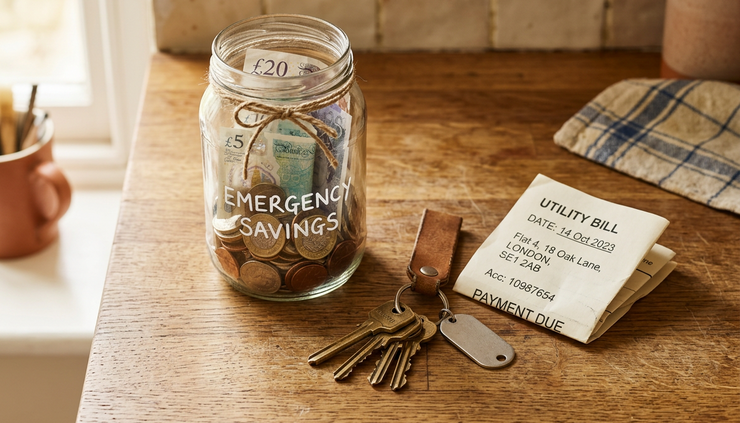
The safest habit is to treat the mortgage as a priority bill and keep an emergency fund where possible.
The simple takeaway
A mortgage is a secured loan that helps someone buy a property without paying the full price upfront. The borrower repays it over time, usually through monthly payments that include interest and part of the loan.
The most important things to understand are how much is being borrowed, what the interest rate does, how long the term lasts, and whether the monthly payment stays affordable.
A good mortgage is not just one that helps buy a home. It is one that still makes sense after the keys are collected.


Comments