Self Employed Mortgage Tips

Getting a mortgage when you work for yourself is possible, but it often asks more of you than a standard PAYE application. Lenders want to see that your income is reliable, your paperwork is clear, and your finances make sense over time.
The good news is that many problems can be fixed before you apply. These self employed mortgage tips can help you present a stronger case and avoid delays.
This guide is for general information only. It is not personal financial advice.

Keep your accounts clear and up to date
Lenders usually want to understand your income over the last two or three years. Some may consider one year of accounts, but a longer track record often helps.
Make sure your accounts are:
Filed on time
Consistent with your tax returns
Easy to understand
Prepared by a qualified accountant where possible
If you are a sole trader, lenders often look at your net profit. If you run a limited company, they may consider salary and dividends. Some lenders may also look at retained profits, but not all do.
That distinction matters. A company director who keeps money in the business may look less affordable to one lender than another, even if the business is healthy.
A good accountant can help you keep things tidy, but they should not inflate figures just to help a mortgage application. Lenders can spot inconsistencies, and they will want the numbers to match official records.
Get your tax documents ready early
Self-employed mortgage applications often slow down because documents are missing or do not match.
Common documents include:
Full accounts
SA302 tax calculations
Tax year overviews
Recent bank statements
Business bank statements
Proof of deposit
ID and address documents
You can usually get SA302s and tax year overviews from HMRC online if you complete Self Assessment. If an accountant files for you, ask them what they can provide and how quickly.
Check that your tax year overview shows the tax has been paid or is clearly accounted for. If a lender sees unpaid tax with no explanation, they may ask more questions.
Tip: Create a simple folder before you apply. Keep personal documents, business records, tax papers, and deposit evidence separate. It saves time and makes the application feel more controlled.

Avoid sudden changes before applying
Lenders like stability. Big changes just before a mortgage application can raise questions, even when they make sense to you.
Try to avoid these close to applying:
Changing your trading structure
Taking a large drop in income
Switching accountant
Making unexplained large transfers
Taking on new credit commitments
Using business funds in a confusing way
This does not mean you cannot grow, invest, or change direction. It means you should be ready to explain anything unusual.
For example, if you bought equipment that reduced your profit for one year, keep the paperwork. If you had a quiet period because of illness, caring duties, or a contract gap, be honest and show how income recovered.
Lenders are not only looking at the final number. They are also looking for a believable story behind the number.
Build a stronger deposit and keep it traceable
A larger deposit can improve your options. It may give you access to more lenders, better rates, or a more comfortable affordability calculation.
The source of your deposit matters too. Lenders must check where the money came from.
Common deposit sources include:
Personal savings
Sale of an asset
Gift from family
Retained business funds drawn properly
Equity from another property
If your deposit is a gift, the person giving it will usually need to confirm it is not a loan. If it comes from your business, make sure your accountant confirms the withdrawal is suitable and properly recorded.
Avoid moving deposit money through several accounts without a clear reason. Clean, simple records help.

Keep your personal and business spending separate
Mixing personal and business spending can make your finances harder to read. It can also make a lender more cautious.
A separate business account helps show:
What the business earns
What the business spends
What income you draw for yourself
Whether your cash flow is steady
Personal spending matters too. Lenders review bank statements to understand regular commitments. Gambling, missed payments, payday loans, or frequent overdraft use can weaken an application.
A few months before applying, check your statements as if you were the lender. Look for anything that needs cleaning up or explaining.
This does not mean you must live unrealistically. It means your accounts should show that the mortgage payment would be affordable alongside your normal life.
Protect your credit file
Your credit file is only one part of the decision, but it can carry a lot of weight.
Before applying, check your credit reports with the main UK credit reference agencies. Look for:
Incorrect addresses
Accounts you do not recognise
Missed payments
High credit card balances
Old financial links to other people
Electoral roll errors
Small errors can cause big delays. If something is wrong, raise a correction as early as possible.
Try not to apply for lots of credit before your mortgage application. Multiple searches in a short period can make you look stretched, even if you never used the credit.
Think carefully about how much income you declare
Some self-employed people keep taxable income low by claiming valid expenses or retaining money in the business. That can be sensible for tax planning, but it may reduce mortgage affordability.
A lender can usually only use income it can verify. If your declared income is low, your borrowing may be lower too.
This is where planning helps. Speak to your accountant before your next tax return if you expect to apply for a mortgage. You should still report everything correctly and claim genuine expenses, but you can make informed decisions with your mortgage plans in mind.
Do this early. Once accounts are filed, changing course is harder.
Choose the right lender for your situation
Not every lender assesses self-employed income in the same way. This is one of the biggest reasons strong applicants get declined.
A lender may differ on:
How many years of accounts they need
Whether they average income or use the latest year
How they treat dividends
Whether they consider retained profits
How they view contractors and freelancers
How they handle recent business growth
For example, a photographer with rising profits may need a lender that uses the latest year rather than averaging a weaker earlier year. A company director may need one that understands salary, dividends, and business reserves.
A mortgage broker who works with self-employed applicants can help match the case to lenders more likely to understand it. That does not guarantee approval, but it can reduce wasted time and unnecessary credit checks.
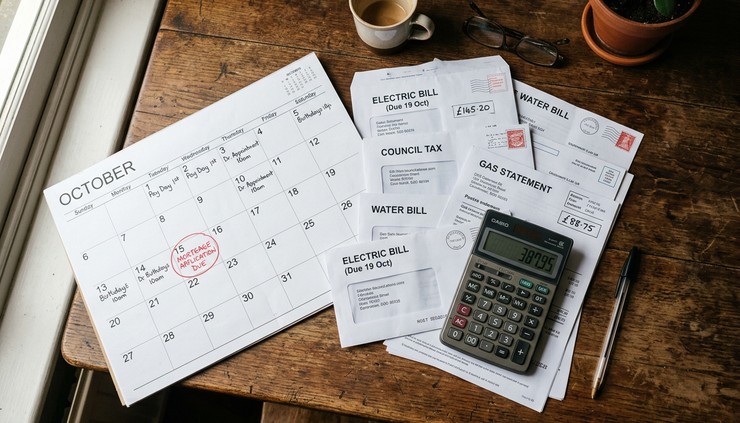
Plan your application around your strongest period
Timing can make a real difference. If your latest accounts show improved income, it may be worth waiting until they are finalised. If your current year is weaker, be prepared for questions.
Good times to apply may include:
After your latest accounts are completed
Once a tax return has been filed
After clearing short-term debts
When your deposit has been in place for a while
Once your credit file has been checked and corrected
Avoid rushing because you have seen a property you like. A rushed application with gaps can lead to stress or rejection. A prepared application gives you more control.
The main takeaway
Self-employed mortgage approval is rarely about one document or one number. It is about the full picture.
Clear accounts, stable income, traceable savings, clean bank statements, and the right lender all work together. Start preparing months before you apply, get your documents in order, and make sure your income is easy to prove.
The more clearly you can show how your money works, the easier it is for a lender to say yes.


Comments